📅 Published on: 17.08.2026
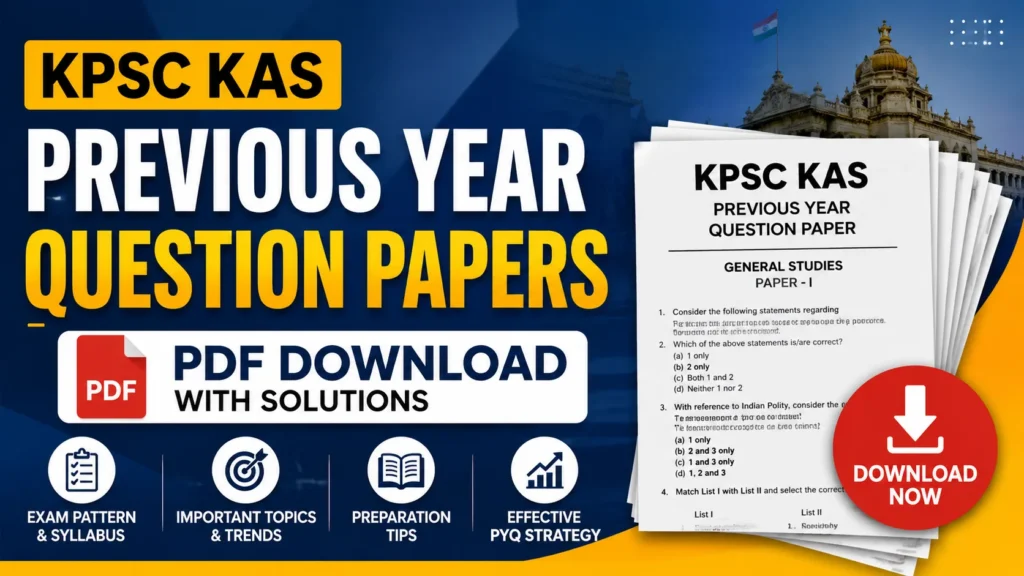
KPSC KAS Previous Year Question Paper - PDF Download
The KPSC KAS previous year question paper PDF is one of the most useful resources for candidates preparing for the Karnataka Public Service Commission (KPSC) Karnataka Administrative Service (KAS) examination. Solving previous year question papers helps aspirants understand the actual difficulty level of the examination, important topics, question trends, and the way questions are framed.
The KAS examination is conducted by KPSC for recruitment to various Group A and Group B administrative posts in the Karnataka state government. Since the syllabus is extensive, candidates need a structured preparation strategy. Previous year papers can help them prioritize topics and practice answering questions within the prescribed time.
In this article, candidates can learn about the KPSC KAS previous year question paper PDF download, examination structure, benefits of solving PYQs, preparation strategy, and recommended books.
KPSC KAS Exam Overview
| Particular | Details |
|---|---|
| Exam Name | Karnataka Administrative Service (KAS) Examination |
| Conducting Authority | Karnataka Public Service Commission (KPSC) |
| State | Karnataka |
| Exam Category | State Civil Services |
| Selection Process | Preliminary Examination, Main Examination and Personality Test/Interview as applicable |
| Question Paper Type | Objective and Descriptive |
| Official Website | KPSC official portal |
| Main Purpose | Recruitment to Karnataka state administrative services |
Candidates should always check the latest KPSC notification for the applicable recruitment cycle because the KPSC KAS exam pattern, syllabus, and selection process can be revised.
KPSC KAS Exam Pattern
Understanding the examination pattern before solving the KPSC KAS previous year question paper is important. The examination generally consists of a Preliminary Examination followed by the Main Examination and the subsequent selection stages prescribed in the recruitment notification.
Preliminary Examination
The Preliminary Examination is objective in nature and is primarily used to shortlist candidates for the next stage. Questions generally test areas such as general studies, current affairs, Karnataka-related topics and aptitude.
Candidates should carefully study the latest notification because the number of papers, marks, duration and qualifying requirements may vary according to the applicable KPSC rules.
Main Examination
The Main Examination is more comprehensive and evaluates a candidate's conceptual understanding, analytical ability, writing skills and knowledge of Karnataka, India and relevant contemporary issues.
| Stage | Nature | Main Objective |
|---|---|---|
| Preliminary | Objective | Screening/shortlisting |
| Main | Descriptive | Detailed assessment |
| Interview/Personality Test | As prescribed | Overall suitability |
🌐 Connect with Us
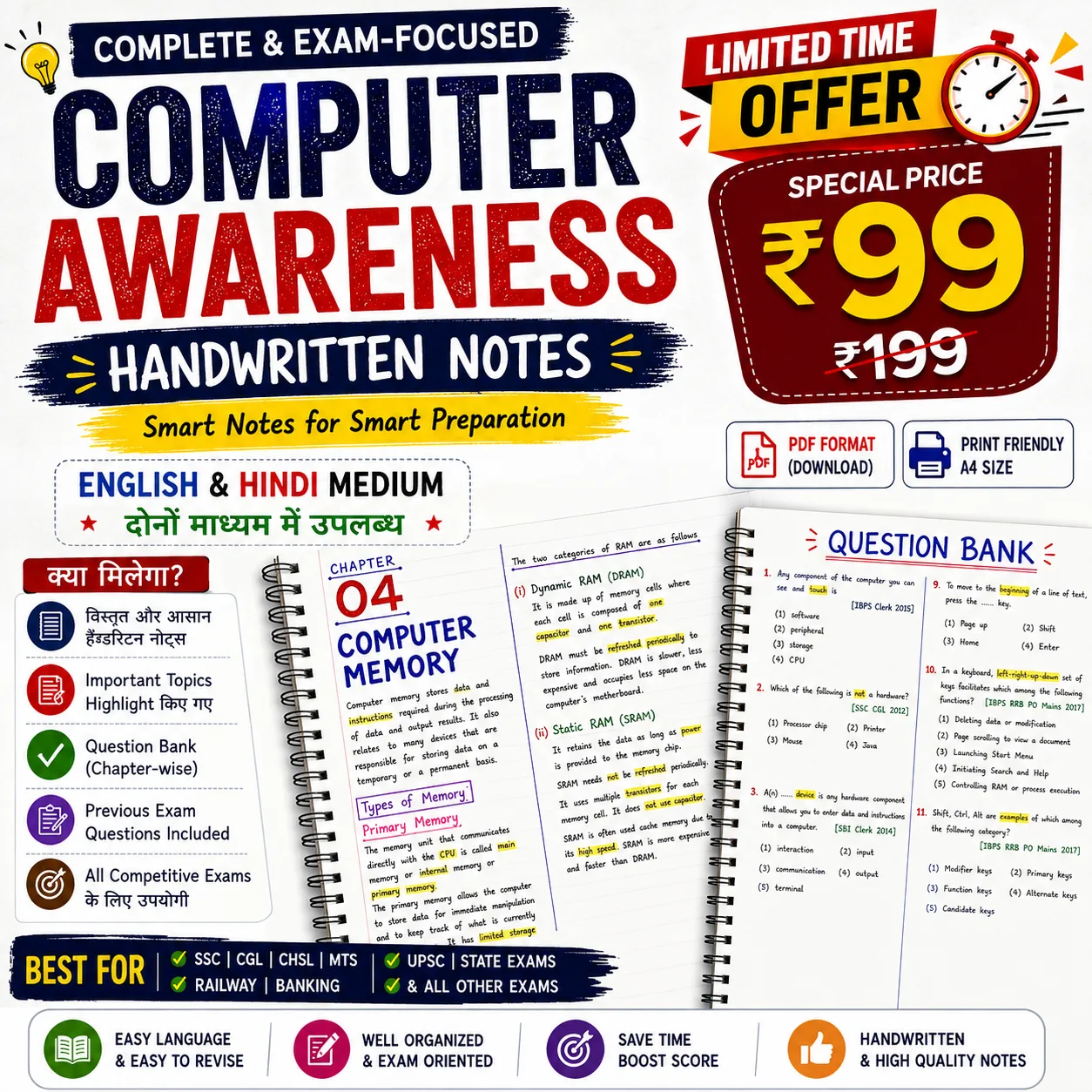
Computer Awareness Handwritten Notes
Hindi & English Medium • PDF • Practice Questions
SSC • Railway • Banking • UPSC • State Exams
₹99 Buy Now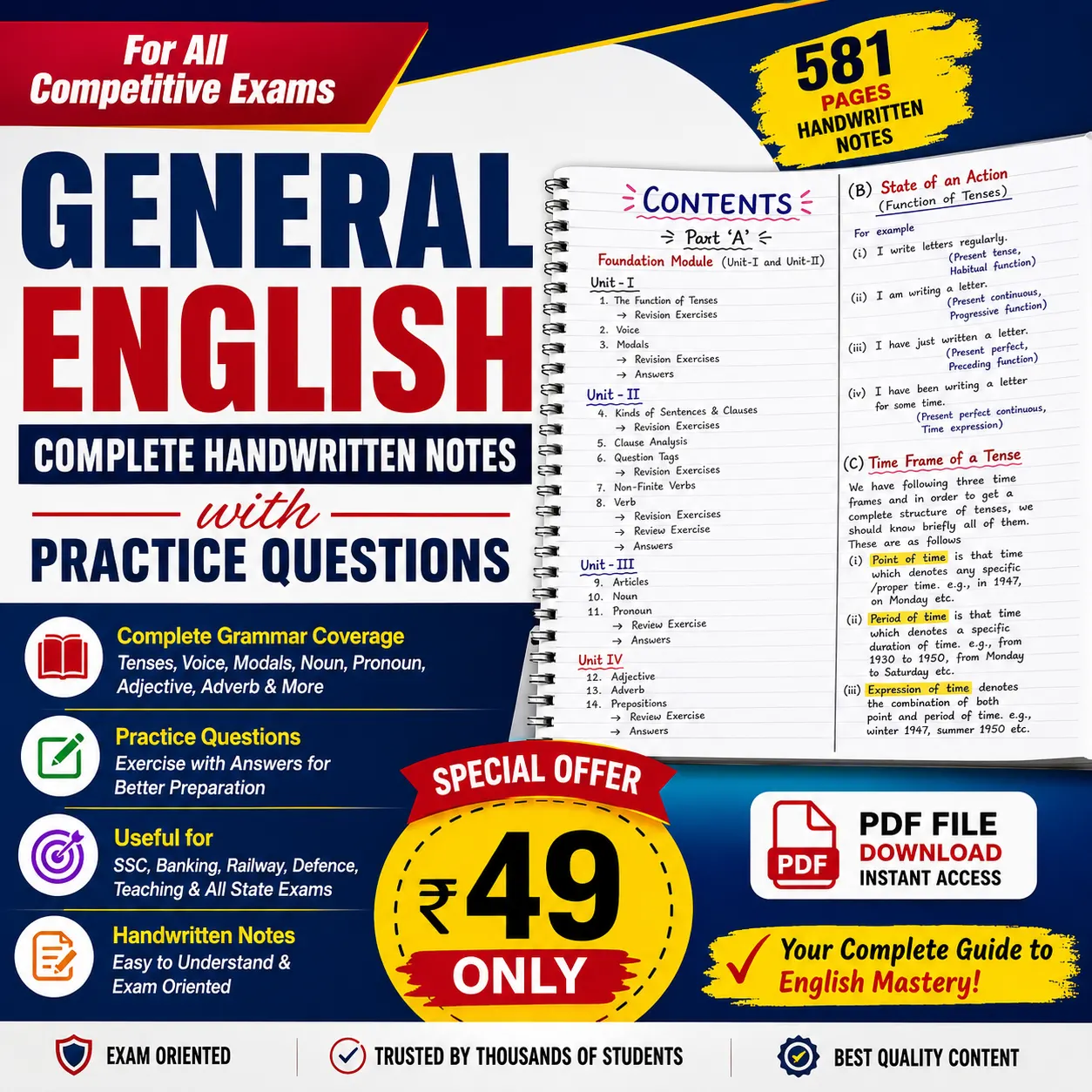
General English Handwritten Notes
581 Pages • Practice Questions • PDF
SSC • Banking • Railway • Defence • Teaching
₹49 Buy Now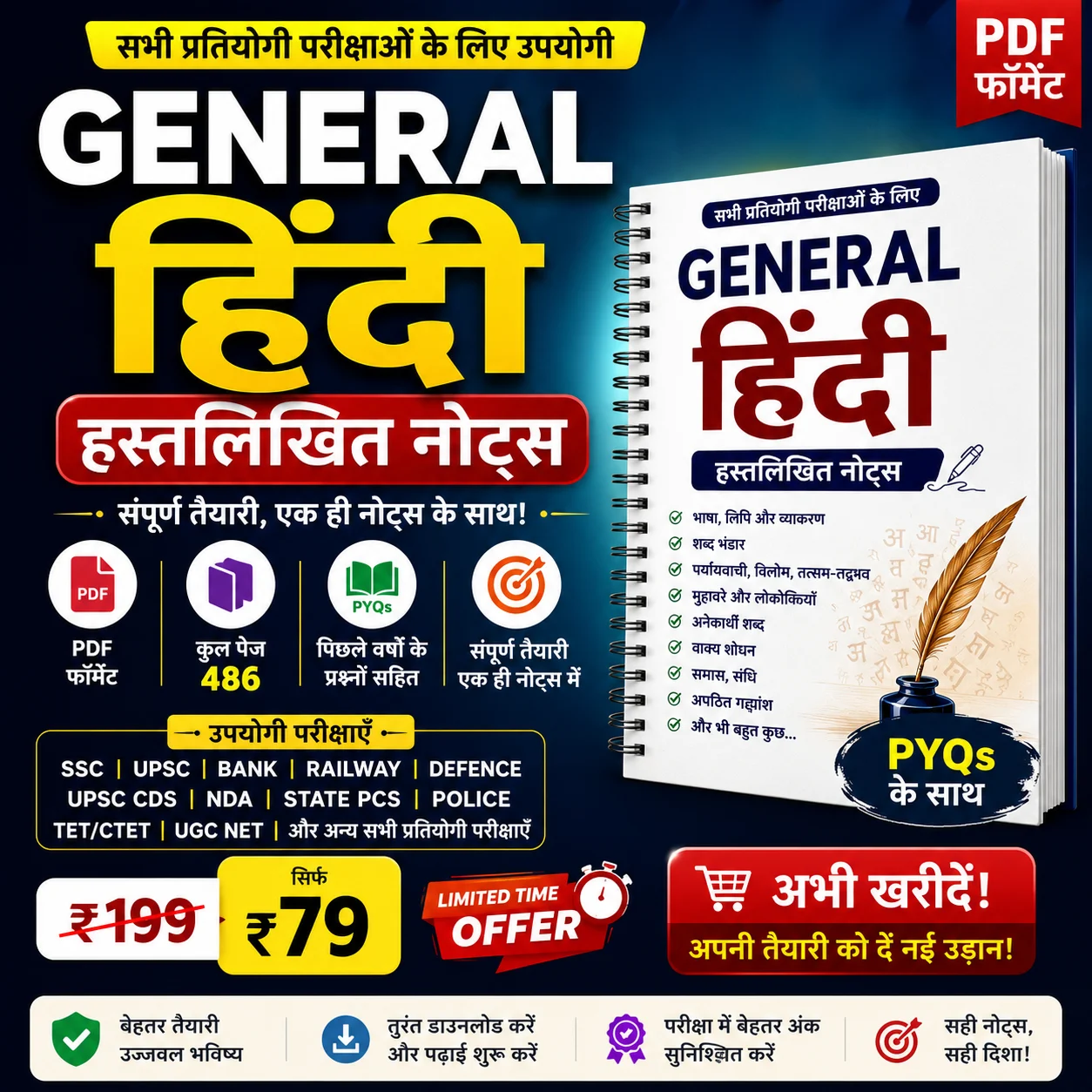
General Hindi Handwritten Notes
Complete Handwritten Notes • PDF • 2026
SSC • Railway • UPSC • UPSSSC • Police • Teaching
₹79 Buy NowKPSC KAS Previous Year Question Paper PDF Download with Solutions
Download the KPSC KAS Previous Year Question Paper PDF for 2021 and 2020. The papers include General Studies 1, 2, 3, 4, Essay, English and Kannada. Click the download button to access the respective PDF.
KPSC KAS Previous Year Question Papers 2021
| Paper | Question Paper | PDF Download |
|---|---|---|
| General Studies 1 | KPSC KAS GS 1 Question Paper 2021 | Download PDF |
| General Studies 2 | KPSC KAS GS 2 Question Paper 2021 | Download PDF |
| General Studies 3 | KPSC KAS GS 3 Question Paper 2021 | Download PDF |
| General Studies 4 | KPSC KAS GS 4 Question Paper 2021 | Download PDF |
| Essay | KPSC KAS Essay Question Paper 2021 | Download PDF |
| English | KPSC KAS English Question Paper 2021 | Download PDF |
| Kannada | KPSC KAS Kannada Question Paper 2021 | Download PDF |
KPSC KAS Previous Year Question Papers 2020
| Paper | Question Paper | PDF Download |
|---|---|---|
| General Studies 1 | KPSC KAS GS 1 Question Paper 2020 | Download PDF |
| General Studies 2 | KPSC KAS GS 2 Question Paper 2020 | Download PDF |
| General Studies 3 | KPSC KAS GS 3 Question Paper 2020 | Download PDF |
| General Studies 4 | KPSC KAS GS 4 Question Paper 2020 | Download PDF |
| Essay | KPSC KAS Essay Question Paper 2020 | Download PDF |
| English | KPSC KAS Qualifying English Question Paper 2020 | Download PDF |
| Kannada | KPSC KAS Qualifying Kannada Question Paper 2020 | Download PDF |
KPSC KAS All Years Question Papers
Candidates can also access the complete collection of KPSC question papers from the official KPSC question paper page.
KPSC KAS Previous Year Question Paper PDF
The KPSC KAS previous year question paper PDF should be an essential part of your preparation material. Candidates should collect papers from multiple examination cycles wherever authentic papers are available.
While solving old papers, do not simply look for repeated questions. Instead, analyze:
- Frequently tested subjects
- Repeated concepts
- Karnataka-specific topics
- Current affairs-based questions
- Difficulty level
- Question distribution
- Conceptual versus factual questions
- Time required to solve different sections
A proper PYQ analysis can help candidates understand which parts of the syllabus deserve greater attention.
KPSC KAS Previous Year Question Paper PDF Download
Candidates looking for KPSC KAS previous year question paper PDF download should preferably use authentic sources such as the official KPSC website, official notifications, and reliable examination-resource portals.
Before downloading a paper, verify the following:
- Examination year
- Preliminary or Main Examination
- Paper/subject name
- Question paper code, if applicable
- Language version
- Whether the PDF is complete
- Whether the paper belongs to the KAS examination
It is also useful to maintain separate folders for Preliminary and Main Examination papers. This makes revision and practice more organized.
How to Use KPSC KAS Previous Year Papers
Simply downloading the papers is not enough. Candidates should use them as a systematic preparation tool.
1. Solve the Paper Without Looking at Answers
Start by attempting the paper under exam-like conditions. Avoid checking solutions after every question. This will give you a realistic assessment of your preparation.
2. Analyze Your Performance
After completing the paper, calculate your correct and incorrect answers. Identify the subjects in which you are losing marks and maintain a mistake notebook.
3. Identify Important Topics
When the same subject or concept appears repeatedly across different papers, mark it as a high-priority area. This does not mean the exact question will repeat, but the underlying topic may remain important.
4. Revise Weak Areas
Use your mistakes to determine what needs additional study. Return to standard textbooks and reliable notes instead of repeatedly memorizing the answers to old questions.
5. Repeat the Test
After revision, solve the same paper again after some time. Your objective should be to improve accuracy and reduce the time required to answer questions.
Benefits of Solving KPSC KAS Previous Year Question Papers
There are several advantages to including PYQs in your preparation.
- Understand the actual examination: Previous papers provide a practical idea of the type of questions asked in KAS.
- Identify important topics: Candidates can identify subjects and concepts that frequently receive attention.
- Improve time management: Regular timed practice helps candidates become faster.
- Increase accuracy: Repeated practice reduces careless mistakes.
- Understand difficulty level: PYQs help aspirants distinguish between easy, moderate and difficult questions.
- Improve revision: Old questions can be converted into a structured revision checklist.
- Build confidence: Familiarity with the examination format can reduce anxiety.
- Evaluate preparation: Mock tests based on previous papers provide a realistic performance benchmark.
KPSC KAS Preparation Tips
Follow the Official Syllabus
Start preparation with the latest official syllabus rather than randomly studying different books. Divide the syllabus into manageable sections and track your progress.
Give Special Attention to Karnataka
KAS preparation requires strong knowledge of Karnataka-related subjects. Study Karnataka history, geography, economy, culture, government schemes and other topics mentioned in the syllabus.
Build Strong General Studies
General Studies covers a broad range of subjects. Prepare Indian polity, history, geography, economy, environment, science and technology and other relevant areas using standard sources.
Practice Current Affairs Regularly
Current affairs can influence both objective and descriptive preparation. Instead of collecting large amounts of information, focus on important national, international and Karnataka-specific developments and understand their background.
Practice Descriptive Writing
For the Main Examination, knowledge alone is not enough. Candidates should regularly practice writing structured answers with an introduction, relevant arguments, examples and a concise conclusion.
Analyze Every PYQ
Do not treat a previous year paper as just another mock test. After solving it, spend sufficient time analyzing why you got questions wrong and which concepts need revision.
Create a Revision Cycle
Revision should be planned throughout the preparation period. Divide subjects into short revision cycles and repeatedly revisit difficult topics rather than postponing revision until the final weeks.
Attempt Full-Length Tests
Once the syllabus is substantially covered, begin full-length tests. Try to recreate examination conditions by following the prescribed time limit and avoiding unnecessary breaks.
Best Books for KPSC KAS Preparation
Candidates should avoid collecting too many books. A limited number of reliable sources combined with PYQs and regular revision is usually more effective.
- Indian Polity: M. Laxmikanth
- Indian History: Standard UPSC-level history books and NCERTs
- Indian Geography: NCERT Geography and a standard physical geography reference
- Indian Economy: A standard Indian economy textbook supplemented with current affairs
- Environment: A reliable environment and ecology reference
- General Science: NCERT Science books and relevant competitive-examination resources
- Karnataka-specific studies: Standard Karnataka history, geography, culture and economy books
- Current Affairs: Reputed newspapers, monthly current-affairs compilations and official government sources
The most important point is to match every book with the latest KPSC syllabus.
KPSC KAS Previous Year Paper Strategy
A useful approach is to divide PYQ practice into three phases.
Phase 1 – Topic Analysis
First go through previous papers without attempting them. Identify recurring subjects and concepts. This will help you understand which areas require more attention during preparation.
Phase 2 – Timed Practice
After completing the relevant portions of the syllabus, solve papers under a fixed time limit. Try to simulate actual examination conditions and record your score.
Phase 3 – Final Revision
During the final stage, use PYQs as a rapid revision tool. Revisit questions you previously answered incorrectly and revise the underlying concepts.
Candidates preparing for the Main Examination should also examine how questions are framed and practice producing concise, relevant and well-structured answers.
Common Mistakes to Avoid
Many candidates download numerous KPSC KAS previous year question paper PDFs but fail to use them effectively. Avoid these common mistakes:
- Solving papers without studying the syllabus
- Memorizing answers instead of understanding concepts
- Ignoring Karnataka-specific topics
- Not analyzing incorrect answers
- Practicing only easy papers
- Focusing exclusively on Preliminary Examination preparation
- Neglecting answer-writing practice for the Main Examination
- Using outdated exam-pattern information
- Depending on too many study materials
- Leaving revision until the last moment
Conclusion
The KPSC KAS previous year question paper PDF download should be an important part of every serious aspirant's preparation strategy. Previous year papers provide valuable insight into question trends, difficulty level, important topics and examination requirements.
However, PYQs work best when combined with the official syllabus, standard study material, current affairs preparation, regular revision and mock-test practice. Candidates should solve papers systematically, analyze their mistakes and revise the concepts behind each question.
With consistent practice and a focused preparation strategy, KPSC KAS previous year question papers can become an effective tool for improving accuracy, speed, confidence and overall examination readiness.